


NBDF has numerous publications, brochures and tools available here for download or if available print versions can be ordered through Brainstorm Print, our printing and shipping partner, via the NBDF Portal. These engaging resources span across different bleeding disorders and can be used for patients and families, or sharing with schools, workplaces and extended family members and friends.
NBDF encourages redistribution of its publications for educational purposes by other nonprofit bleeding disorders organizations. NBDF produced materials, either printed publications or website content, cannot be translated or reproduced in whole or in part without prior written permission from NBDF.
NOTE: Some of these materials were created prior to the organization's rebrand from the National Hemophilia Foundation to the National Bleeding Disorders Foundation. Though some items may reflect NHF branding, they are likely still relevant. For questions on any specific materials, email info@bleeding.org.
Translation Permission Request Contact NFRC to Learn More
Family Emergency Kit Checklist
The checklist includes tips for creating a family emergency plan that addresses both universal needs and special considerations for those affected by a bleeding disorder.
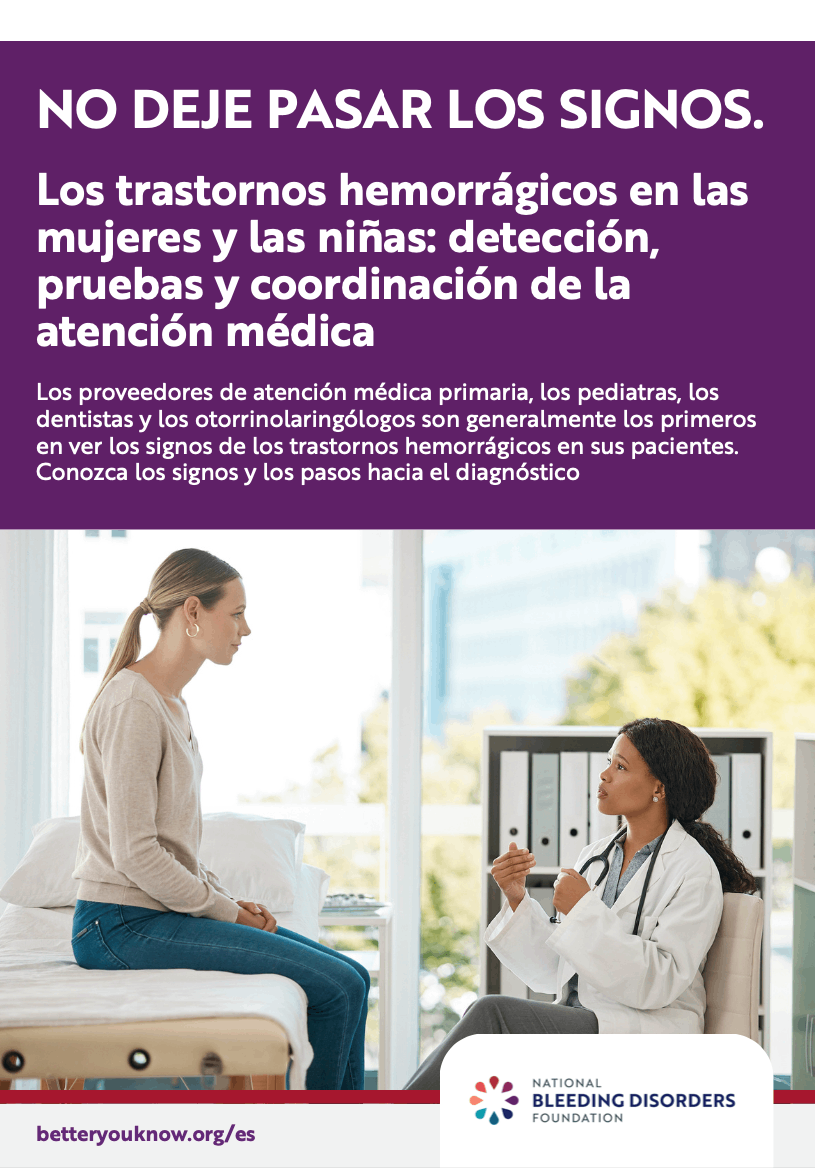
No Deje Pasar los Signos
Este folleto informa a los médicos de atención primaria sobre los signos y los pasos a seguir para el diagnóstico.
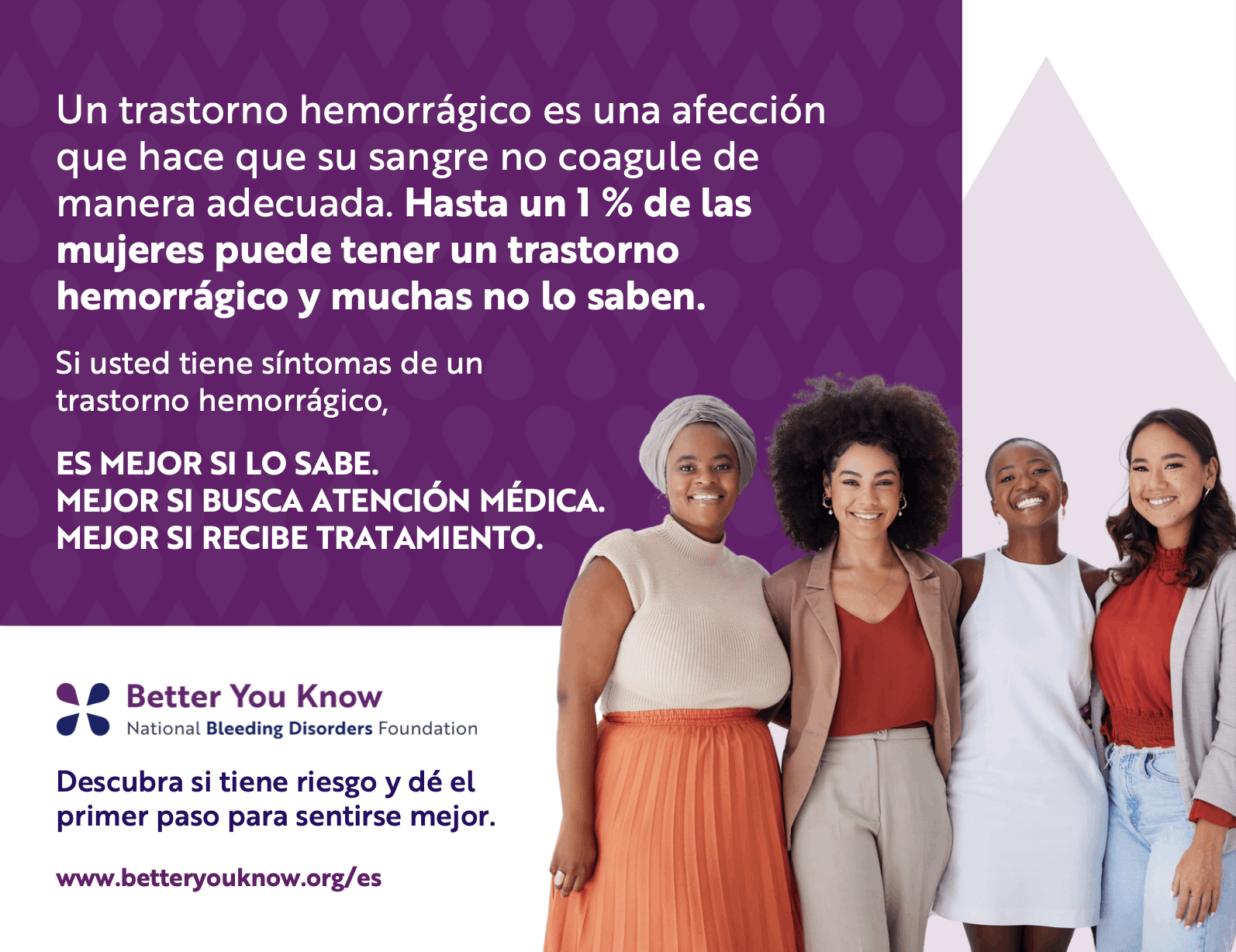
Better You Know Síntomas 2
Esta postal puede utilizarse para concienciar sobre los trastornos hemorrágicos, especialmente a quienes no están diagnosticados.
The Child with a Bleeding Disorder: First Aid for School Personnel (Spanish)
A publication aimed at school nurses and teachers who have a student with a bleeding disorder. Descriptions of typical injuries and other incidences when bleeding occurs are discussed with proper steps that need to be followed as well as standard precautions and medications (bulk copies only available in Spanish).
Playing it Safe: Bleeding Disorders, Sports and Exercise (Spanish)
Este folleto educativo describe la importancia de la actividad física para la salud de las articulaciones y el bienestar general de las personas que viven con trastornos hemorrágicos. Proporciona una visión general de varios deportes y actividades para todas las etapas de la vida y aborda cómo participar en la actividad física con seguridad.
Para Ginecólogos Obstetras: No Deje Pasar los Signos
Este folleto informa a los ginecólogos y obstetras sobre los signos y los pasos a seguir para el diagnóstico.
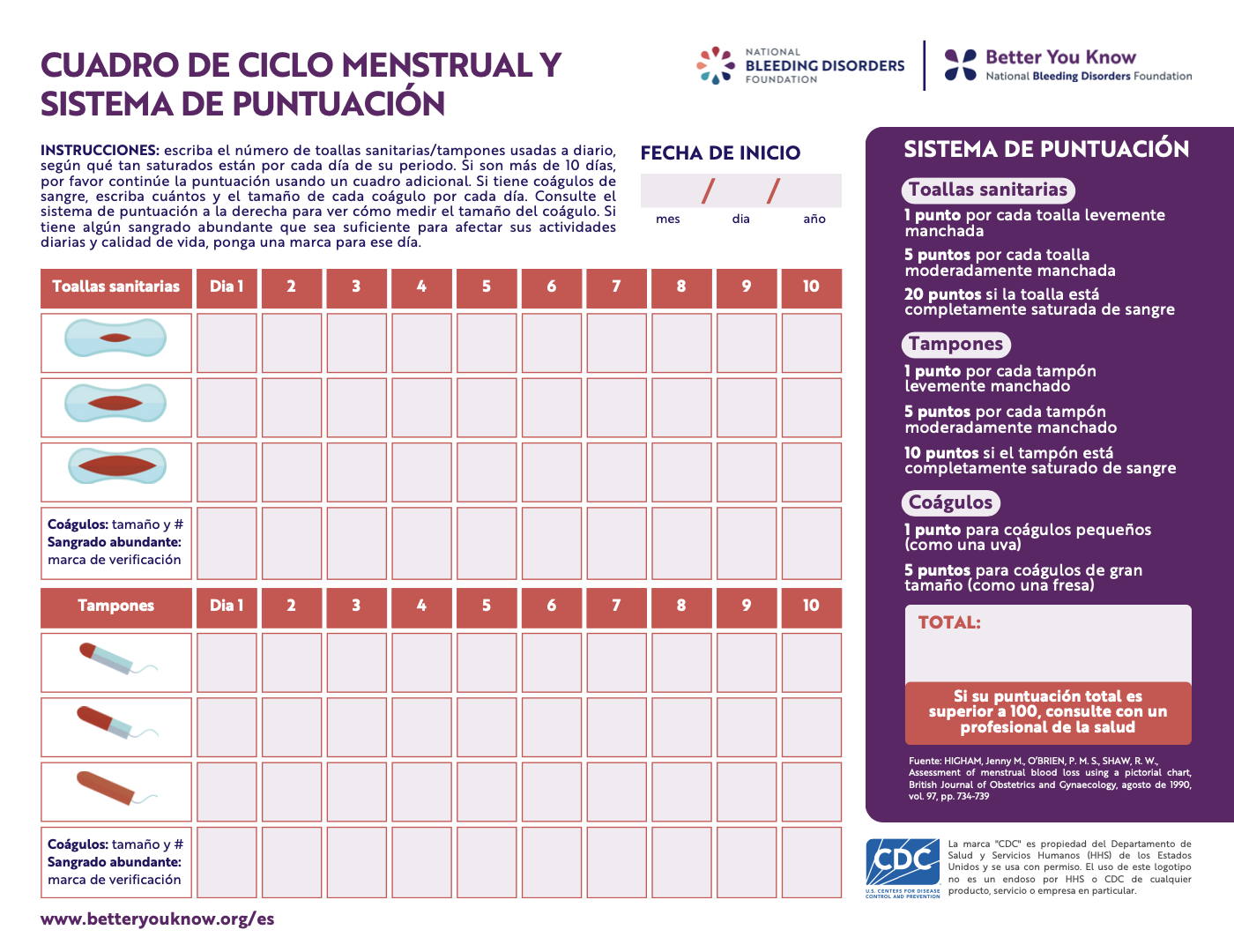
Cuadro de Ciclo Menstrual y Sistema de Puntuación
Este formulario realiza un seguimiento del flujo menstrual en función de la saturación con tampones o compresas.
Inherited Bleeding Disorders and Child Abuse Investigations
A resource for emergency medical providers, healthcare workers, day care and school personnel, and child protection advocates, this booklet is intended to prevent unwarranted charges of abuse filed against parents or guardians of children with bleeding disorders. It explains hemophilia and von Willebrand disease and describes typical patterns of bruising or bleeding in children with the disorders.
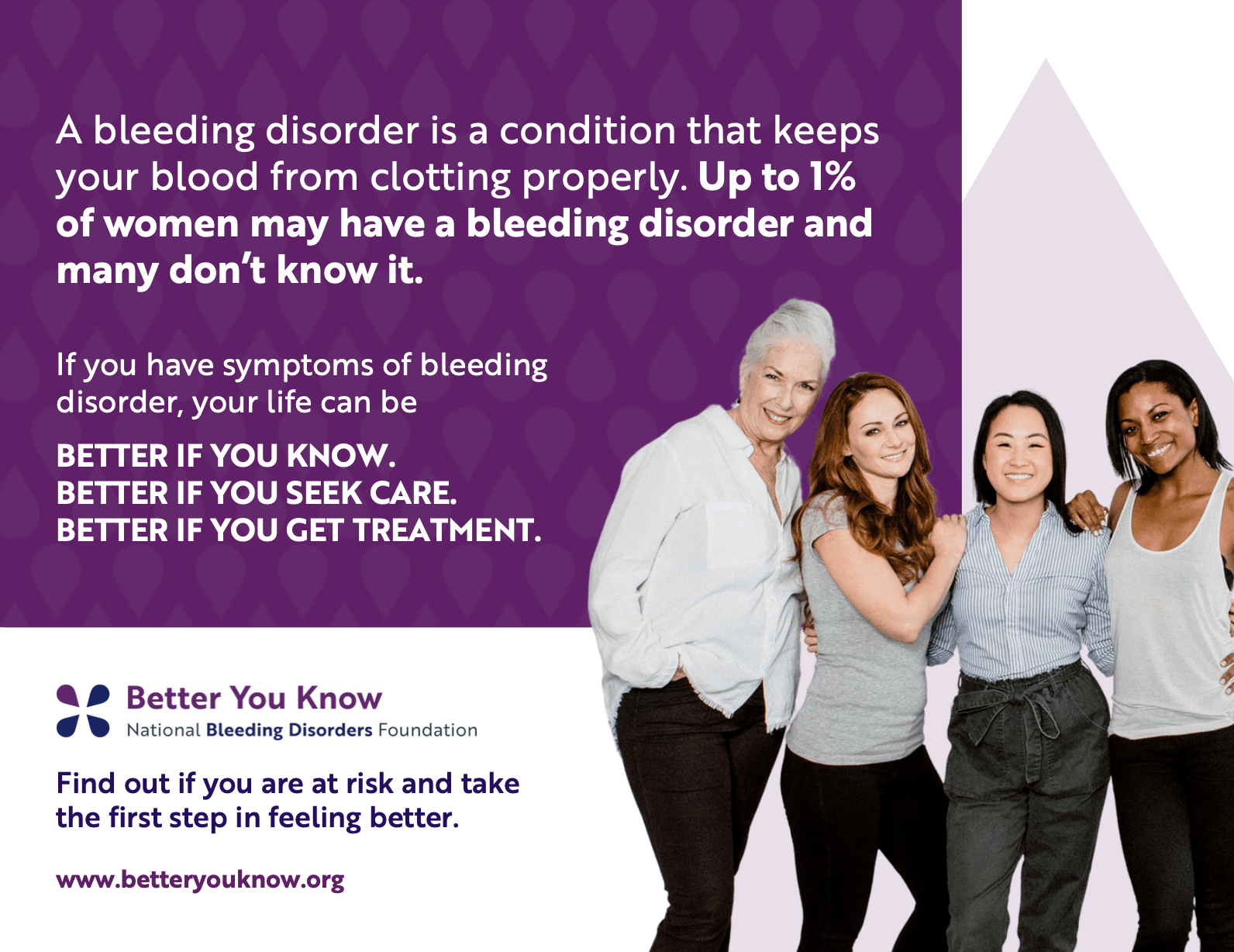
Better You Know Signs and Symptoms 1
This postcard can be used to raise awareness about bleeding disorders, especially for those that are undiagnosed.
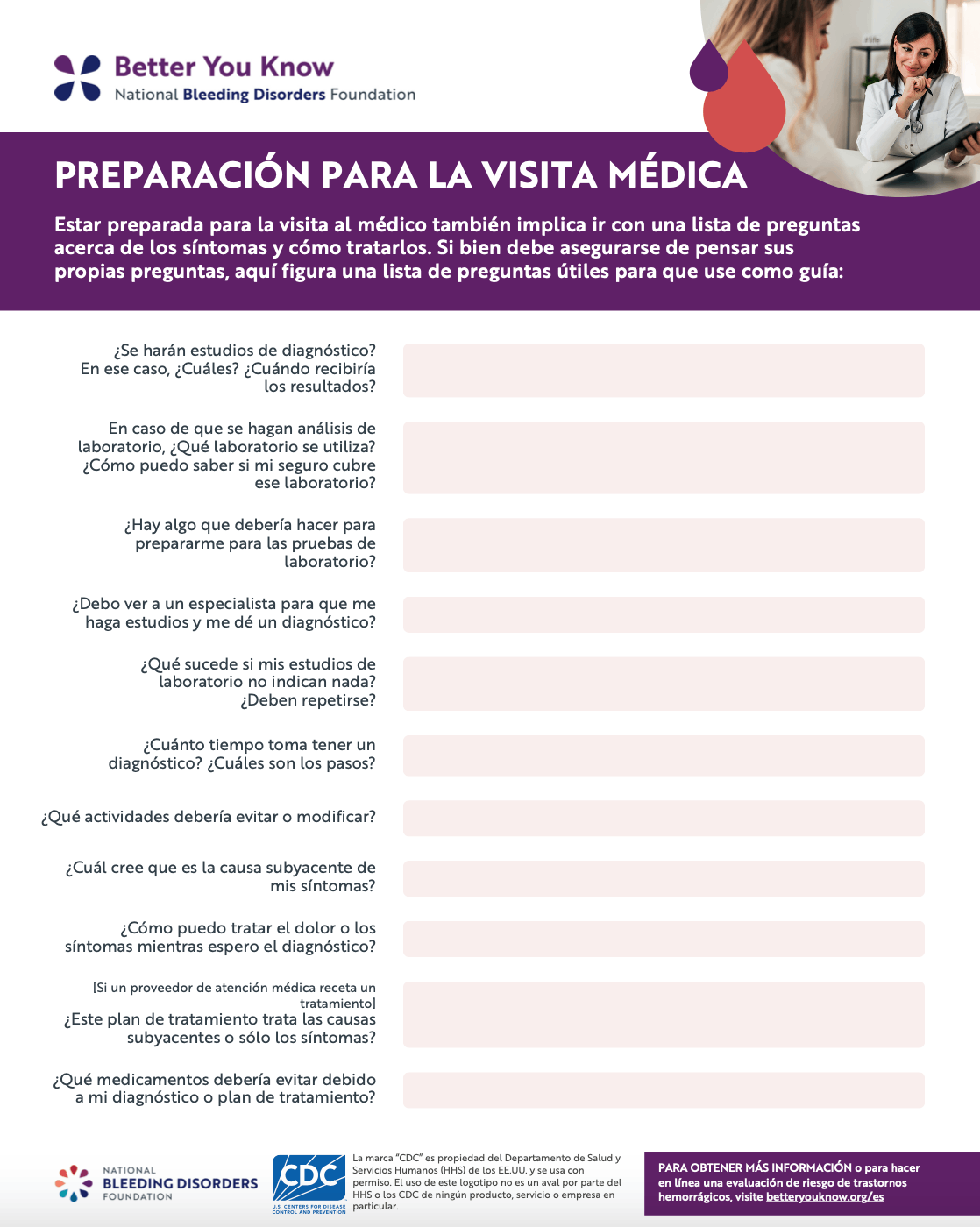
Preparación para la Visita Médica
Lista de preguntas que los consumidores deben tener en cuenta antes (uno o dos meses) de una visita al médico.
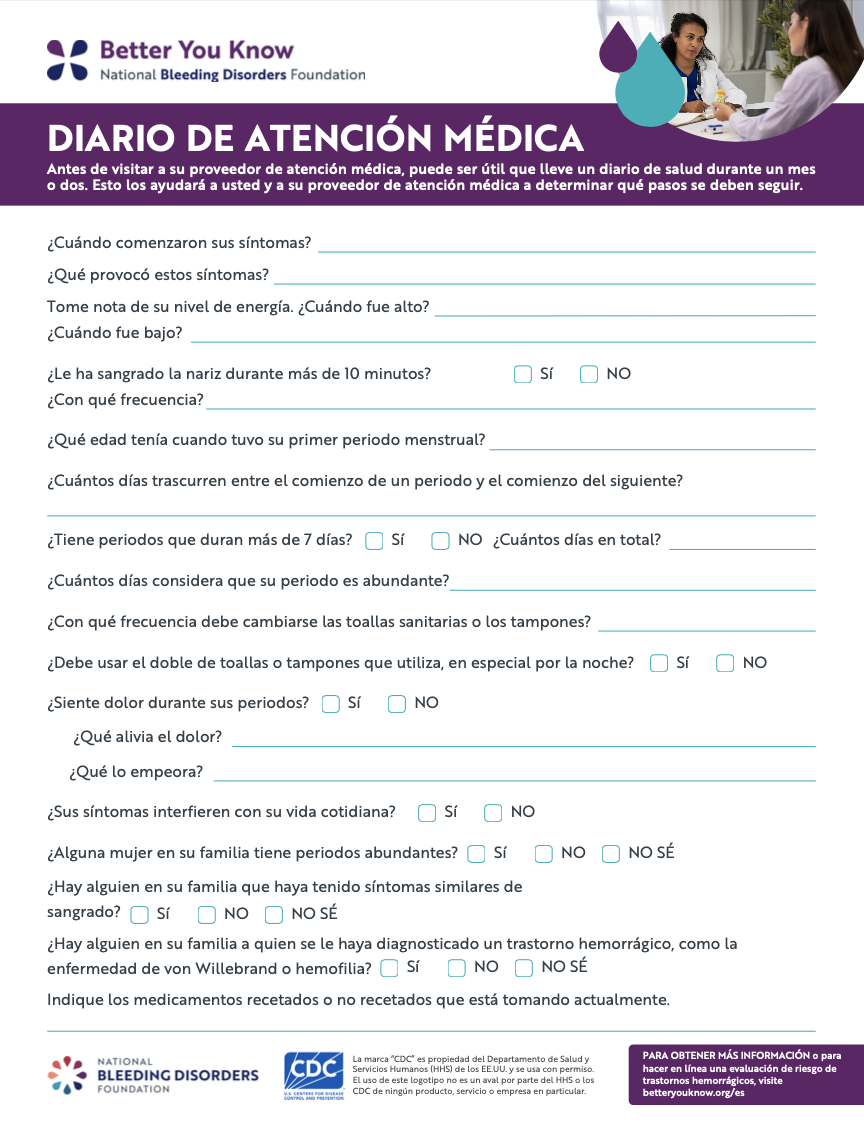
Diario de Atención Médica
Lista de preguntas que los consumidores deben tener en cuenta antes (uno o dos meses) de una visita al médico.
What is Mild Hemophilia?
Written in a straightforward and accessible style, this brochure is designed to help educate young readers about the mechanisms behind coagulation, prolonged bleeding and inheritance. It provides information on common myths, tips on prevention and basic treatment options.
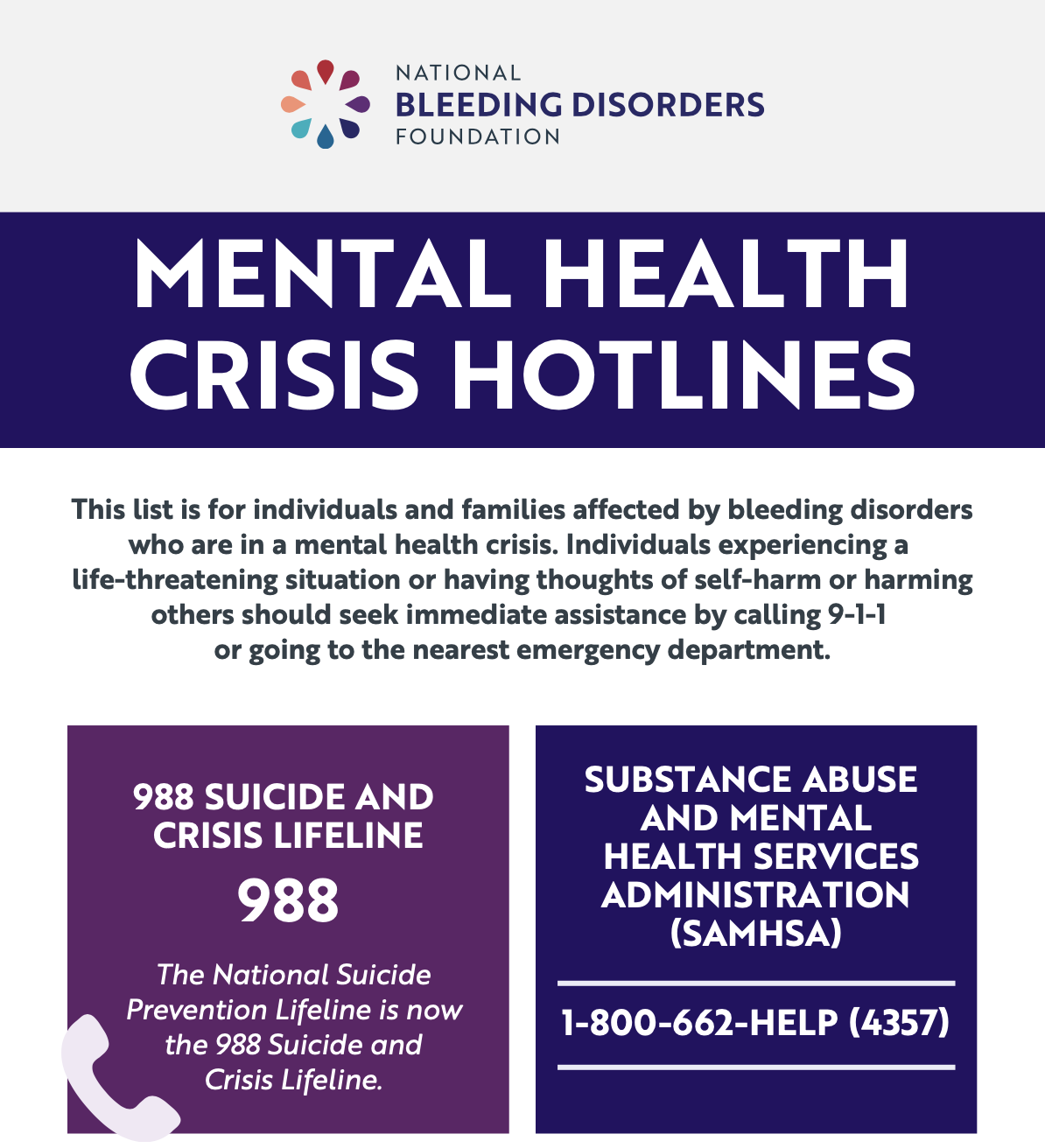
Mental Health Hotlines
This list is for individuals and families affected by bleeding disorders who are in crisis. Individuals experiencing a life-threatening situation or having thoughts of self-harm or harming others should seek immediate assistance by calling 9-1-1 or going to the nearest emergency department.