

Mental health is as important as physical health, and the two are connected. When a person has a bleeding disorder, or has a family member with one, mental health challenges can arise that can make it difficult to cope with usual day-to-day routines.
If you or someone you care about is experiencing an immediate crisis or having thoughts of self-harm or harming others, then seek immediate assistance by calling 9-1-1, calling or texting 988, calling your healthcare provider, or going to the nearest emergency department.
What Resources Does NBDF Have for Mental Health?
NBDF’s Step for Living offers information and resources for adults and children affected by bleeding disorders. You can find information on recognizing the signs of depression and anxiety and how to reduce stress. For parents and caregivers, you’ll find information on talking to your child about their emotions, and how to recognize signs of depression and anxiety in children or teens.
NBDF has facilitated many educational sessions for families affected by bleeding disorders on managing anxiety and depression. This video shows an open discussion with community members about how to know when life is out of balance, and what resources are available to get back on track to enjoying life and loved ones. It explores coping strategies for depression and anxiety, ways to work with a health care team, and lifestyle approaches that can improve well-being.
Resources for Substance Use
If you feel you need inpatient or residential care for substance use or mental health, it is important to prepare for barriers to access. Many people who are seeking treatment have experienced denials due to their bleeding disorders. The Bleeding Disorders Substance Use & Mental Health Access Coalition has prepared an extensive toolkit that can help you and your healthcare provider advocate for the care you need.
- Access Toolkit for individuals seeking care
- Provider Toolkit for healthcare providers
Find Support at Your Local Chapter
Many chapters offer programs that can assist with your mental well-being. Men’s groups, women’s groups, groups for new families, groups for kids and teens all offer a chance to speak openly with others who understand what you are going through and can provide emotional support. If you are not connected with your local NBDF bleeding disorders chapter, find one near you at our chapter directory.
Connect with Your Hemophilia Treatment Center (HTC)
At your hemophilia treatment center, you can find social work staff dedicated to providing mental health resources and referrals, and HTCs may also offer counseling and therapy services.
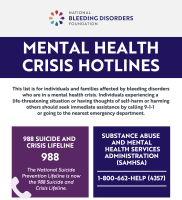
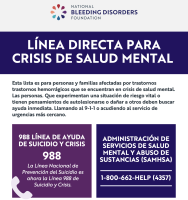
Hotlines
If you or someone you know is experiencing a mental health crisis, or is experience domestic or sexual violence, there are hotlines you can contact that can connect you with local assistance.
How NBDF Can Help You
It is one of NBDF's goals to make sure all people with bleeding disorders can connect with resources and support so they can lead full and healthy lives. We provide:
- A local chapter network to connect with others who understand
- Educational resources for every stage of life
- The Neil Frick Resource Center for specific questions
- Webinars, conferences, advocacy programs, and research initiatives
Join our mailing list to stay up to date on what NBDF can offer you and your family.
Make a Difference
Your support helps NBDF create programs and resources about mental health and wellness for people with bleeding disorders, including the Neil Frick Resource Center, Steps for Living, and in-person educational workshops through NBDF’s Education for Empowerment program.