Application of attention destruction techniques during factor concentrates infusion to children with Hemophilia
Empowering the Future of Hemophilia Through Swimming (Poster Abstract)
Pain assessment and treatment in bleeding disorder care: The need for social work specific education
Behavioral Health and Substance Use Screening Practices among Hemophilia Treatment Centers
The Relationship of Hope and Self-Compassion with Quality of Life among Individuals with Bleeding Disorders
Qualitative findings from bleeding disorders camp
Management of Hemophilia B in US Women and Its Impact on Education, Employment, and Activities: Results From the Bridging Hemophilia B Experiences, Results, and Opportunities Into Solutions (B-HERO-S) Study
Objective:
The B-HERO-S study assessed the impact of hemophilia on US adults with hemophilia B, including affected females. Here we describe the symptoms, management, and impact on education, employment, and engagement in recreational activities in women.
Methods:
Adults aged ≥18 years with hemophilia B (factor IX <40%) completed a survey including questions about bleeding, treatment, and psychosocial impact.
Summary:
Of 299 respondents, 86 were women (median age, 29 years; 6% were aged >45 years) with mild (29%), moderate (65%), or severe (6%) hemophilia. The majority reported arthritis (66%) and anxiety/depression (57%); 19% reported acute and/or chronic pain. Most (86%) were treated with some form of “routine infusions to prevent bleeding”; 16% reported self-infusing, 31%/17% by partners/family. Self-infusion was initiated at median age of 18, and learned from HTCs (86%), camps (71%), or parents (57%). Most reported difficulty with access to factor due to affordability/availability in the past 5 years (72%) or expected in the next 5 years (85%). Women reported a median (mean) of 4 (3.86) bleeds in prior year; 83% bled within the last 4 weeks with most recent bleeding in joints (73%) or muscles (21%). Twenty-five percent reported one specific “bad” joint, most commonly the knee (69%). Nearly all were seen in HTCs (85%) with a median (mean) of 3 (3.5) HTC visits per year. Most (88%) went past high school with 55% completing 4-year college and 24% graduate degrees. Most (94%) reported some negative impact on completing their education (7% very large/69% moderate/19% small impact), most commonly due to difficulties concentrating at school due to bleeds or pain (81%). Most were employed full-time (71%) or part-time (10%), commonly in office work (71%). Most (94%) reported a negative impact on their working life (3% very large/71% moderate/20% small impact); 36% reported leaving a job because of their hemophilia. Nearly all (99%) indicated some negative impact on their ability to engage in recreational activities (3% large/83% moderate/13% small impact). From a list of predetermined activities, dancing (50%) and walking (48%) were the most common current activities; bicycling (20%), dancing (17%), and swimming (16%) were the most common discontinued activities. Most reported treatment changes around activities (21% started prophylaxis, 52% revised time of doses, 38% added doses, 34% changed amount of doses); 8% reported no change and 3% no moderate/vigorous activities.
Conclusion:
Clinical presentation and treatment in women mirrored that reported by men except for greater anxiety/depression and more issues with access to treatment. Nearly all affected women reported a negative impact on their education, employment, and activities. While these results may be limited by bias in recruitment selecting those most symptomatic, the data reveal opportunities to improve awareness of and guidance around management and counselling of affected women.
Mild-Severe Hemophilia B Impacts Relationships for US Adults and Children With Hemophilia B and Their Families: Results From the Bridging Hemophilia B Experiences, Results, and Opportunities Into Solutions (B-HERO-S) Study
Objective:
The B-HERO-S study evaluated the impact of mild-severe hemophilia B on the lives of affected adults and children. Here we assess the impact of hemophilia B on relationships.
Methods:
US adults with hemophilia B and caregivers of affected children completed separate 1-hour online surveys that included questions regarding impact on interpersonal relationships.
Summary:
Most (88%) of the 299 adults completing the survey had mild-moderate hemophilia B. Of those, 54% were married or in a long-term relationship, and 44% were single. Most adults (87%) reported that hemophilia impacted their ability to form close relationships with partners or prospective partners; 35% were very/quite dissatisfied with the support received from a previous partner. Ninety percent reported that their experiences in a prior relationship, including satisfaction with support from their previous partner, impacted their decision to enter a relationship with their current partner. Nearly all participants (98%) were very/quite satisfied with the support received from their current partner. The top reason for satisfaction was “my partner takes the lead in providing financial security” (45%). Most were very/quite satisfied with the support from family (87%) and friends (96%). Most participants reported a negative reaction or experience as a result of disclosing their hemophilia (friend/colleague/employer, 76%/80%/82%); some reported having felt bullied by peers/colleagues (69%/66%). Majorities reported that past experiences impacted which friends/colleagues they told about their hemophilia, and how or when they disclosed their hemophilia status to these individuals (97%/95%). Seventy-four percent of participants indicated that hemophilia has affected the quality of their sex life; only 54% were extremely/moderately satisfied with their overall sexual relationship. Many reported having had a bleed during sex (40%). Of 150 caregivers of children with mostly mild-moderate hemophilia (74%), 89% were married or in a long-term relationship, and most felt very/quite supported by their partner (98%) and family (87%). Impact on unaffected siblings was more often mixed (49%) than negative (18%). Most felt very/quite satisfied with support of teachers (91%), children at school (80%), and other adults in regular contact (72%). Most caregivers reported negative experiences telling a friend (76%) or having their child tell a friend (69%) about the child’s hemophilia; 43% reported that their child was bullied as a result of having hemophilia.
Conclusion:
While the impact of severe hemophilia on relationships has been reported in HERO and other studies, B-HERO-S suggests that mild-moderate hemophilia B also significantly impacts relationships of affected men/women and boys/girls, especially in terms of disclosure, intimacy, and feeling bullied by peers/colleagues. Opportunities may be explored to more proactively counsel individuals with mild-moderate hemophilia B and families in the setting of comprehensive care to better navigate interpersonal relationships and improve quality of life.
Perceptions of Vulnerability, Protective Behaviors, and Reported Stress in Mothers of Sons with Hemophilia
Depression levels in patients with Hemophilia and von Willebrand
Bleeding disorders are a group of conditions that result when the blood cannot clot properly (American Society of Hematology, 2017). The most frequently occurring bleeding disorders include von Willebrand Disease (VWD), Hemophilia A, and Hemophilia B (FDA ́s, 2016).Some studies shows that is important to considered the depression in the psychological approach of patients with a bleeding disorder (Recht, Batt, Witkop, Gut, Cooper, Kempton, 2016 and Osorio, Bazán, Izquierdo, 2016). Beck ́s theory defined depression in cognitive terms. He saw the essential elements of the disorder as the “cognitive triad”: (a) negative view of self, (b) a negative view of the world, and (c) a negative view of the future. The depressed person views the world through an organized set of depressive schemata that distort experience about self, the world, and the future in a negative direction (Beck, A. 1972 in Lynn, P. 2015).
Objective:
Compare depression levels in groups of patients with haemophilia, Von Willebrand (VWD) and apparently healthy people.
Methods:
The study design was quantitative, non-experimental, transactional and correlational in which the difference between three groups of participants was analyzed: 41 patients with hemophilia A or B, 10 patients with VW and 20 apparently healthy people. The sample was obtained from Tabasqueña de Hemofilia A.C. through a non - random sampling of subjects - type. Depression symptoms were obtained by Beck ́s inventory and for control variables a questionnaire was applied. All of the findings were assessed by SPSS 21 for Windows program. Data were analysed using descriptive statistics, comparisons between groups were evaluated with Games-Howell coefficient and post hoc test.
Summary:
71 participants with a mean age of 28.24. Considering the patients who have a bleeding disorder, 74.50% of the sample was deficient of factor VIII, 11.76% of factor von Willebrand, 11.76% of factor VII and 1.96% of factor IX; 82.35% of them have access to treatment while 17.64 have not access. Statistically significant differences were found only in apparently healthy people compared to haemophilia patients (p=0.031). A marginal difference was detected between the group of apparently healthy people and von Willebrand patients (p=0.081).
Conclusions:
The presence of a coagulation disease increase the levels of depression and the severity of the symptoms.
Key Words: Hemophilia, Von Willebrand, Depression.
Intervention of Mexicans children and teenagers with hemophilia for their social integration
Hemophilia is a rare bleeding disorder in which the blood doesn't clot normally. (National Heart, Lung, and Blood Institute, 2013). It mostly affects males.(Raabe, 2008).
For parents hearing that their new baby has hemophilia can be stressful and worrying. Babies do not realize what is happening around therefore parents often tend to be overprotective. As the boys grow up, they are capable of seeing the cause and effect of situations on their own and they realize that they cannot do the same things like their friends. When the adolescence come, teenagers worry about what society thinks, so having hemophilia may make them feel different. (Hemophilia Federation of America, 2015). Hemophilia is not an illness, it ́s just a “life style” which people have to live with.
Within psychological intervention is important to address the emotional aspect of patients and family ́s support patient handling of his illness, personal life and surroundings.
Objective:
Describe intervention strategies in the summer camp “Ceiba” of “Tabasqueña de Hemofilia A.C.” in order to promote the social integration in patients with hemophilia.
Materials:
Intervention programs carried out in the camp were used to realize an analysis of the strategies, which were provided by "Tabasqueña de Hemofilia A.C."
During the last eight years, eight camps were realized, the average of assistants every year was 80, 60 patients (between 6 and 24 years old) and 20 additional people in medical field. The objective of the camps is to learn, enjoy, bring all their everyday life experiences and have a better quality of life. (Tabasqueña de Hemofilia, 2007).
The interventions were directed to: accept and make awareness of patient ́s life ́style, learn about hemophilia, live in cooperation, socialize and integrate, improve communication, express himself, team work, experience the freedom, become independent, self-esteem and have a better quality of life.
Each intervention was related to a specific activity; 3 workshops (Psychologist, hematology and nursing), parents and relatives letters, hydrokinesitherapy, talent show, treasure hunt and visits to entertainment and cultural places.
Camps have a great significant learning in their lives and teach children and teenagers valuable life skills through education, activities and games; socialization is achieved, independence, and sense of individual responsibility and group.
Having this camps around the world and taking this interventions will be excellent, because its an interactive way to achieve self- realization and learn to live with the disease, knowing others with the same "life ́s style".

HEMO-milestones tool increases assessment of self-management competency and plan for skill building in patients with hemophilia
The Effects of Hemophilia on Socialization
Does Quality of Life improve with successful immune tolerance induction? An illustrative case report.
Treatment, Outcomes, and Access to Care Among Young Adults (ages 18-30) With Hemophilia in the US Hemophilia Experiences, Results and Opportunities (HERO) Study
Hemophilia impacts relationships and employment of young adults (ages 18-30) in the us hemophilia experiences, results and opportunities (hero) study
Pain and Arthropathy Impact Quality of Life of Young Adults With Hemophilia (ages 18-30) in the United States: Observations From the Hemophilia Experiences, Results and Opportunities (HERO) Study
Objective:
To assess quality of life, self-reported comorbidities, health-related quality of life (HRQoL), and impact of hemophilia on activities of young adult (YA) patients with hemophilia (PWH).
Methods:
Analysis of US YA-PWH respondents (aged 18-30) in the international HERO study conducted in 2010-2011. US respondents were recruited through NHF, Facebook, and e-mail. An independent ethics board approved the US survey.
Summary:
Of 189 adult PWH HERO respondents in the United States, 66 were aged 18-30 years, 74 were aged 31-40 years, and 49 were older than 40 years. The median (interquartile range) age of YA-PWH was 26 (22-28), and had hemophilia A (58%), hemophilia B (21%), or hemophilia with inhibitors (21%). Most were Caucasian (77%). Half were on prophylaxis (50%), with the remainder treated on-demand alone (24%) or with occasional short-term prophylaxis (24%). Compared with PWH older than 40 years, YA-PWH less frequently self- reported bone/skeletal/arthritis (41% vs 67%), chronic pain (38% vs 57%), and viral comorbidities (20% vs 65%). On EQ-5D-3L, 62% of YA-PWH reported no difficulties with mobility, 71% no difficulties with usual activities, and 94% no difficulties with self-care. In contrast, 68% reported moderate and 5% extreme pain/discomfort, and 33% reported some/moderate and 8% extreme anxiety/depression. On EQ-5D-VAS, 53% reported VAS scores of 80-90-100 (vs 24% for PWH >40 years). Surprisingly, 89% reported pain interference with daily activities in the past 4 weeks, with 9% reporting it was extreme/a lot. More YA-PWH had pain only with bleeding than PWH older than 40 (42% vs 18%), with 14% citing pain all the time and 39% reporting pain all the time and worse with bleeding. YA-PWH reported seeking psychological treatment in the prior 5 years (26%), frequently related to hemophilia (71%). When asked about specific activities, YA-PWH reported participating in lower-risk (80%), intermediate-risk (61%), and higher-risk activities (27%); older PWH reported 82%, 45%, and 16%, respectively.
Conclusions:
YA-PWH in the United States are less likely than older PWH to report arthritis, chronic pain, or viral diseases; yet, HERO results suggest these remain important problems for this age group. Pain appears to be perhaps the most significant; only 11% did not report pain interference in the past 4 weeks, and only 27% reported no pain/discomfort at the time of the survey. Additionally, 33% reported some/moderate depression. The relationship of intermediate- and high-risk activities to the rates of reported pain and arthritis is unclear.
Depression in children with severe Hemophilia - a pilot study
Children with severe Hemophilia (CWH) suffer pain and inconvenience due to the required IV factor concentrates' injections and mostly exhibit poor quality of life. These children don't have any hope that their life will improve in the future. Most of them keep the Hemophilia a secret; therefore they are unable to get any emotional support from their peer group. These parameters are known stressors and triggers leading to depression, especially among children and adolescents (due to their lack of mature psychological defense mechanisms). The consequences of depression might be hazardous, since such children may neglect their medical treatment, leading to further deterioration of their medical state.
Objective:
We compared the depression level of children with Hemophilia to healthy children of the same age and background.
Methods:
Depression was evaluated using a standard validated questionnaire of depression that was developed by A.Beck - the CDI. We compared 20 children with severe Hemophilia with 25 non-Hemophiliac children.
Summary:
The calculated score for degree of depression was 7.6 for CWH vs age matched controls with a score of 12.32. The mean of normal populations is around 9. Parametrical T test for Equality of Means = 0.013.
This is the first reported study objectively addressing the issue of depression in CWH.
Conclusions:
We found the opposite of what we had expected: The children with Hemophilia were rated significantly much less depressed then the children without Hemophilia. This finding merits further validation in future larger studies and
must be examined very carefully, due to the complexity of the psychological defense mechanisms.
Don’t Push Your Luck! Educational Board (not Bored) Game for Families Living with Hemophilia
Objective:
This poster outlines evaluation of an educational family board game, “Don’t Push Your Luck!” designed to inspire discussion about hemophilia, and help school-age children learn about decision-making. Since children with hemophilia have a life-long disorder, this game provides a resource to help them learn how to make decisions for transitions to self- care.
Methods:
This game was developed based on recommendations by school-age children from previous research on partnership roles in hemophilia care. In the game, each player takes on the role of a child with hemophilia, exploring choices and consequences in everyday experiences. A multi-site, mixed method research project was coordinated by Mount Royal University, with sub-sites in Canada and United States. In phase I, the board game prototype and questionnaires from boys (n=3) and parents (n=5) living with hemophilia and boys (n=3) and parents (n=5) living with cystic fibrosis was refined. In phase II, we evaluated the revised version of the board game with children who were living with hemophilia and their household family members over age 8 years. The primary objective was to explore how playing an educational board game affected school age children’s engagement in decision-making for self-care. Children and parent perspectives were compared in the way the board game affects engagement in decision-making for children’s hemophilia self-care. Recommendations for future board game development were solicited. Purposive sampling was used to recruit household family members (n=50), including at least one parent/guardian (n= 22) and children aged 8-12 years living with hemophilia (n= 16). Two researchers visited homes to play the game, interview families, observe their responses to the game, and provide pre and post-game questionnaires on decision-making and Haemo-Quol Index© quality of life, and post-game enjoyment. Audio recordings and field notes were documented to record participant observation. Questionnaire items on decision making, quality of life observations, and game enjoyment were analyzed using descriptive statistics. Qualitative analysis of written, verbal and observed behaviours was summarized in thematic categories provided further evaluation of the board game intervention.
Summary:
Comparisons between children and adults were analyzed. Findings indicate that this game is an enjoyable and effective resource for school-age families to engage in discussions relevant to hemophilia self-care skills and decision-making.
Conclusion:
This board game is an interactive, developmentally appropriate resource for families with school-age children who are living with hemophilia to facilitate engagement and conversation about everyday life experiences in preparation for their transition to adult self- care.
This project was generously funded by an unrestricted grant from Bayer Healthcare.
Prevalence of Depression in US Patients with Hemophilia A Compared with a General Medical Population: A Retrospective Database Analysis
Objective:
Prevalence of clinical depression in persons with hemophilia (PWH) has been reported to be from 0%–50%. Most papers studied fairly small numbers of PWH; many had no controls and used instruments not validated for depression. One recent paper, using the Patient Health Questionnaire-9, a validated instrument for depression, reported a prevalence of 37% in 41 adult PWH. Our objective was to determine the prevalence of depression in PWH in the United States.
Methods:
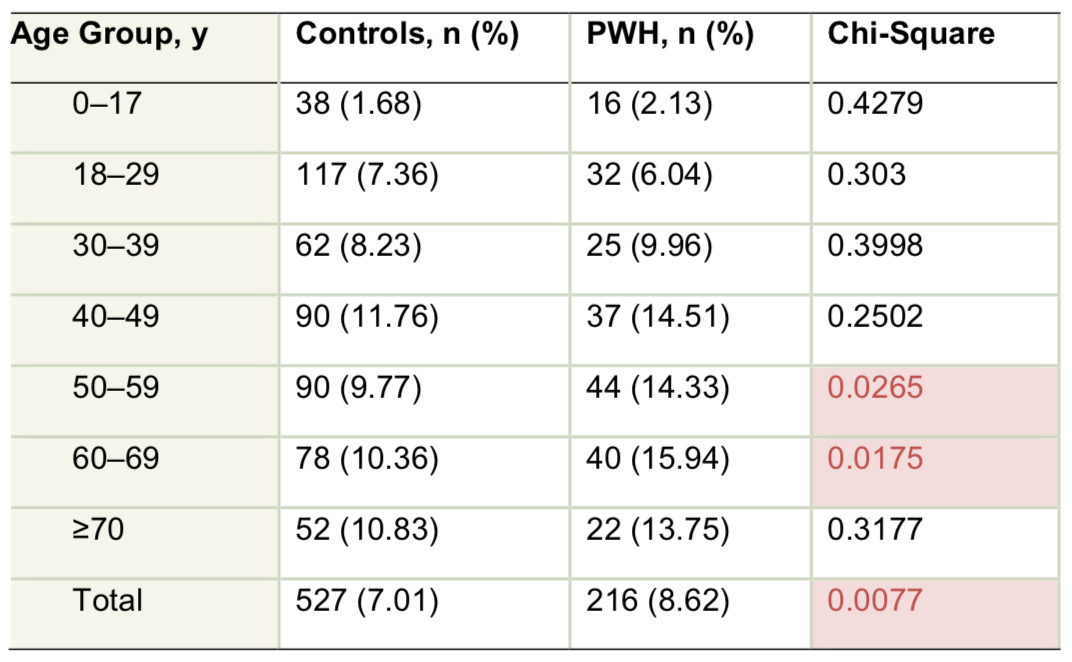
Using the MarketScan® Commercial and Medical Research databases, we compared depression prevalence in 2506 PWH and 7518 controls. Male patients with hemophilia A were identified using an International Classification of Diseases, Ninth Revision, Clinical Modification (ICD-9-CM) code (ICD-9-CM 286.0) and were matched (based on age, eligibility months in the study, region, and health plan type) in a 1:3 ratio with controls (no hemophilia diagnosis). Evidence of depression was determined using ICD-9-CM 296.20– 296.26, 296.30–296.36, and 311 codes. Chi-square tests were used to compare frequencies.
Summary:
PWH had a statistically significant increase in depression prevalence overall and in age groups 50–59 years and 60–69 years and a numerical increase in all other age groups except 18–29 years (Table). The delta between PWH and controls steadily increased between ages 30 and 69 years.
Table. Patients with Major Depressive Disorder

Conclusions:
Commercial claims databases have limitations, including coding errors and inability to verify accuracy of diagnoses. However, in PWH versus a 3:1 control group in a US commercially insured sample that may not be representative of the overall population, depression prevalence was greater in PWH, reaching a peak of 16% in those aged 60–69 years. Awareness of this comorbidity is important as the hemophilia population ages in an era of declining healthcare-delivery resources.
Relationship of quality of life, pain, and self-reported arthritis with age, employment, bleed rate, and utilization of hemophilia treatment center and healthcare provider services: US results from adult patients with hemophilia in the HERO study
Accommodating cultural needs and crossing language barriers in bleeding disorder patients: Results from a provider-patient survey by home infusion provider
Psychosocial Intervention To Improve Compliance with Comprehensive Care Visits
Objective:
Patients with hemophilia have been receiving comprehensive care at Hemophilia Treatment Centers (HTC) for the past 30 years which includes: annual medical and psychosocial assessments, training for home infusions of factor, physical therapy evaluations and treatment.
As many of our patients with Hemophilia now self -infuse, they require less visits to the HTC, Emergency Department and hospitalizations. We have noted over the past few years that many patients are delinquent in keeping yearly comprehensive visits. In an effort to increase attendance at comprehensive clinic, and introduce and assess the success of psychosocial interventions, on increasing compliance with appointments, a standard assessment form was created to identify reasons for non-attendance at comprehensive care visits.
Methods:
Data collection included characteristics of the household such as marital status and family size, last comprehensive re-evaluation and ages of patients (< 18 or >18 years). Assessment of barriers included: drug addiction, school related issues relating to academic success, value of comprehensive clinic during a non-emergent time, DYFS involvement, major psychosocial issues, transportation and work related issues such as financial concerns and concern for using days for non-emergent reasons.
Each identified patient was contacted by the social worker to assess reasons for non- compliance utilizing the standard assessment form. Following the assessment, the social worker created and implemented an individually tailored plan developing interventions and employing education, counseling and supportive services.
Summary:
A total of 26 patients were identified as delinquent in comprehensive care visits. Eight were pediatric patients and eighteen were adult patients. All identified patients were called and assessed for barriers to compliance with clinic visits. The major barrier identified was both parents’ and patients’ value of comprehensive clinic during a non-emergent time (46 % of patients). The second major barrier was work related issues (31% of noncompliance). Major psychosocial issues (15 %) and school issues (8 %) accounted for the remaining causes of non-compliance with clinic appointments. Individual plans to address barriers were made and implemented. Following the psychosocial intervention 46 % of the previously non- compliant patients made comprehensive clinic visits.
Conclusions:
Identification of psychosocial reasons for non-compliance to comprehensive care clinic with the development of individual plans to address needs lead to improved compliance with visits.
Adherence and outcomes in hemophilia
Translation and Validation of an Instrument to Measure the Care-related Quality of Life of Informal Caregivers in English for the United States
Objective:
Caregivers of hemophilia patients may experience physical, social, emotional and financial problems as a result of their care tasks. Measurement of the caregiver experience is important in hemophilia as the majority are informal caregivers; typically unpaid family or friends. In order to carry out studies within the United States, a need exists for a translated and validated instrument to measure informal caregivers’ care-related quality of life in English for the U.S.
Methods:
The CarerQol instrument, covering 7 domains measuring the care-related quality of life of informal caregivers, including fulfillment, relational, mental and physical health problems, social impact, receipt of family support and financial impact, was selected on which to base an English U.S. version. The Dutch (Netherlands) source was translated into English (U.S.) by two forward linguists, working independently, who then collaborated to create a harmonized version. The project team, consisting of the forward translators, project manager, survey research analyst and independent Dutch (Netherlands) reviewer, discussed the harmonized English (U.S.) version to make necessary revisions. The English (U.S.) harmonization was then back-translated into Dutch (Netherlands), and a second Dutch linguist compared the back-translation to the source Dutch to ensure conceptual equivalence of the English forward translation and Dutch source. A client representative, who is a native English (U.S.) speaker, reviewed the English translation against the Dutch as an additional quality measure. After the English (U.S.) harmonization was finalized, it was debriefed via telephone interviews with 5 volunteers using screenshots of the questionnaire’s web version.
Summary:
A total of 5 subjects from the U.S. participated in debriefing interviews. Subjects ranged in age from 24 to 59 years, with educational levels ranging from 11 to 16 years. Sixty percent (60%) of the sample was female. Interview data confirmed that the English (U.S.) harmonized translation is conceptually equivalent to the source Dutch, and is understood by subjects in the United States.
Conclusion:
Per the cognitive debriefing results, the English (U.S.) harmonized translation based on the Dutch CarerQol instrument adequately captures the concepts in the original Dutch and, overall, is easily understood and confirmed as culturally appropriate by subjects in the United States. The resulting instrument is validated for use by English speakers in the United States, and captures the 7 quality of life domains as included in the source instrument.
Canadian social worker and nurse perspectives on the Hemophilia Experiences, Results and Opportunities (HERO) study results from Canada
Objective:
Describe social worker and nurse perspectives on the Hemophilia Experiences, Results and Opportunities (HERO) results from Canada.
Methods:
Adults with hemophilia (“adults,” ≥18 years) and parents of children (<18 years) with hemophilia (“parents”) were recruited through local hemophilia organizations and completed an online psychosocial assessment. Advisory board meetings with Canadian social workers and nurses were held to discuss the HERO results in January and April 2013, respectively.
Summary:
Key psychosocial issues identified by social workers and nurses included issues with sex life, pain, and employment. One-half (9/18) of adults with hemophilia in Canada reported that hemophilia had affected the quality of their sex life. Social workers noted that there is a need for more discussions and professional support regarding sexual intimacy, in addition to a need for more training for healthcare professionals (HCPs) on how to engage in conversations about sexual intimacy. Possible solutions to this issue provided by nurses include handouts to start conversations, education on strategies for HCP seminars, websites with patient testimonials, and information nights through local hemophilia chapters. Overall, 9/30 adults with hemophilia reported that pain had interfered with their daily life extremely or quite a lot. Of 27 adults, 9 reported pain all the time and 13 reported pain all the time that gets worse when they have a bleed. Social workers noted that there is a lack of chronic pain care and there needs to be an increase in sensitivity toward pain issues. Solutions proposed by nurses included a literature review about pain-assessment tools for hemophilia, developing tools to teach parents how to assess pain, developing an application for assessing and managing hemophilia-specific pain, offering pain intervention, developing distraction tool kits, and teaching alternative ways to cope with pain. Only 15/29 Canadian adults with hemophilia were employed; 35/39 parents were employed. Social workers noted that there is discrimination at work and school. To improve career guidance, nurses suggested the following: explore vocational issues, increase hemophilia treatment center (HTC) awareness, capture facts around what is or is not possible with respect to jobs, vocational support programs to start earlier, and clarify the HTC’s role in advocacy.
Conclusions:
HERO provided key insights into psychosocial issues facing Canadian adults with hemophilia and Canadian parents of children with hemophilia. Nurses and social workers provided strategies that could help improve the lives of both patients and parents.