

Federal:
Medicaid Work Reporting Requirements
On June 1, the Centers for Medicare and Medicaid Services (CMS) released guidance for states on how to implement the community engagement requirements (also known as work reporting requirements). As a result of a provision included in H.R.1, beginning January 1, 2027, states are required to implement these requirements as a condition of Medicaid eligibility for certain beneficiaries. NBDF, alongside partner organizations, has been very engaged on this issue – protecting access to insurance for individuals living with bleeding disorders is NBDF’s top priority. This has included sending a letter to all State Medicaid Directors requesting that individuals living with a bleeding disorder be excluded from these new requirements based on the medical frailty definition included in H.R. 1. Under this definition, someone living with a serious or complex medical condition would be considered “medically frail” and excluded from the requirements. The June 1 guidance, however, went beyond what was included in the law and specifies that someone must not only have a serious or complex medical condition but also that the State must prove this condition prevents the individual from being able to work.
On June 30, a group of 26 states sued CMS in federal court over the work requirements guidance. The plaintiffs charge that CMS’s guidance sets out a definition of medical frailty that is harsher than and contrary to the language of H.R. 1. The plaintiffs further assert that CMS’s guidance “arbitrarily and capriciously” fails to consider the burden imposed on states and on Medicaid enrollees. The plaintiffs ask the court to invalidate provisions of the guidance, and to pause implementation and enforcement of those provisions pending judicial review.
NBDF issued a statement on the CMS guidance and will continue to provide the community with the information and tools necessary to help individuals keep their Medicaid coverage.
House of Representatives Advances 2027 Health Funding Bill
In early June, the House Committee on Appropriations passed the fiscal year (FY) 2027 funding bill for federal health programs. This bill included good news for the bleeding disorders community. There is language included to support the hemophilia program at the Health Resources and Services Administration (HRSA) and both funding lines for the two bleeding disorders programs at the Centers for Disease Control and Prevention (CDC) are fully funded. NBDF continues to engage in the appropriations process, including working with partner organizations on the issues of adequate staffing at the CDC’s Division of Blood Disorders. The bill still needs to pass the full House, and the Senate needs to act but this is a positive step in the appropriations process.
Prior Authorization and the Impact on the Bleeding Disorders Community
Prior authorization is a process that requires a patient or their health care provider to get pre-approval in order to receive care or prescription drugs. Because prior authorization can create harmful delays for patient care, NBDF has long advocated for reforms to update and simplify prior authorization requirements. NBDF was accordingly pleased to submit comments in early June supporting a proposed CMS rule to standardize and streamline prior authorization processes across various public and private payers. NBDF’s comments urged CMS to work with its sister agencies to extend the streamlined requirements to all health plans.
Additionally, Representatives Julie Johnson (D-TX) and Mike Lawler (R-NY) recently introduced H.R. 9192, the Prior Authorization Reform for Autoimmune and Blood Disorders Act, which would limit the number of prior authorizations required by private health insurance plans to once per year for drugs used to treat autoimmune diseases or blood disorders.
State:
California: SB 1199, the state’s copay accumulator adjuster bill, passed the Assembly Health Committee unanimously June 30. The Bleeding Disorders Council of California and NBDF provided supporting comments.
AB 1887, which would exempt therapies for rare diseases from insurance prior authorization requirements, passed the Senate Health Committee unanimously July 1.
Pennsylvania: HB 2226, Pennsylvania’s copay accumulator legislation, was passed by the House Insurance Committee. Unfortunately, the bill was amended by the Committee to allow for copay maximizers and is no longer supported by NBDF and other bleeding disorders groups. NBDF looks forward to working with Representative Kinkead and members of the legislature in the coming months to improve the bill.
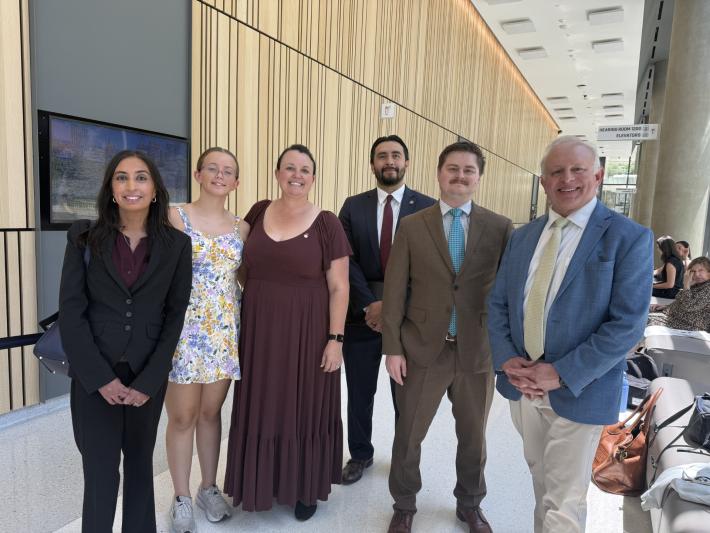
NBDF Senior Director of State Government Relations Bill Robie with advocates, including Executive Director of the Bleeding Disorders Council of California, Lynne Kinst in Sacramento, CA